Captain’s Knock: Laura Wolvaardt’s Heroic Century in the World Cup Final
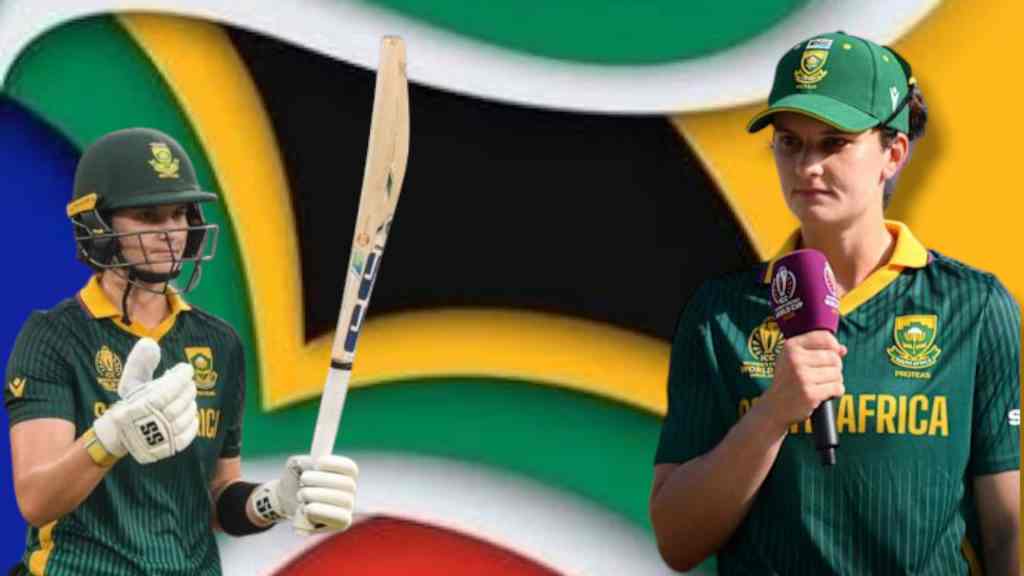
In the cauldron of the ICC Women’s World Cup 2025 Final, amidst the deafening roar of the crowd in Navi Mumbai, South African captain Laura Wolvaardt scripted a masterpiece of tenacity, elegance, and defiance. Her magnificent century, a fighting 101 runs from 98 deliveries, was not just a personal milestone but the very backbone of the Proteas’ challenge against a formidable Indian side. This landmark performance ensured her place in history as only the second player—across both Men’s and Women’s World Cups—to score a century in both the semi-final and the final of the same edition, an extraordinary feat that speaks volumes of her temperament for the grandest stage.
A Chase Under Pressure: The Early Onslaught
Set a challenging target of 299 by the hosts, South Africa’s chase began with the familiar urgency and intensity that a World Cup final demands. Wolvaardt, fresh off a monumental 169 in the semi-final, walked out with the weight of her nation’s hopes resting squarely on her young shoulders. The pressure mounted almost immediately as India’s bowlers, backed by impeccable fielding, struck crucial early blows. The loss of her opening partner, Tazmin Brits, to a sharp run-out, and the quick exit of the incoming batter, Anneke Bosch, meant the pursuit was quickly placed under severe duress. The scoreboard read a precarious 62 for 2, then soon became a more desperate situation as the experienced Marizanne Kapp and the anchor Sune Luus also fell victim to the relentless pressure applied by the Indian attack, particularly the surprise golden arm of Shafali Verma.
The Lone Warrior: Wolvaardt’s Resilience
As wickets tumbled around her, Wolvaardt was a picture of unflappable concentration. Her innings was a masterclass in anchoring the chase, combining her signature silken drives and cuts with a newly discovered grit. She refused to be rattled, her focus narrowing down to the simplest unit of the game: one ball, one run at a time. The first half of her fifty was marked by caution and pristine technique, utilizing the gaps with surgical precision rather than raw power. She brought up her half-century, a landmark that also saw her eclipse the record for the most runs scored by a batter in a single edition of the Women’s World Cup, a testament to her phenomenal consistency throughout the tournament.
The most critical phase of her innings came after the fifth wicket fell, plunging South Africa into a deep crisis at 148 for 5. Alongside the young Annerie Dercksen, Wolvaardt had to navigate the suffocating middle overs, where the required run rate was beginning to climb relentlessly. This partnership, forged in the fires of a World Cup final, became the pivot point of the innings.
Accelerating with Class: Reaching the Milestone
The true genius of Wolvaardt’s hundred was her calculated acceleration. Having consolidated the innings and built a crucial partnership with Dercksen, she chose her moments to counter-attack with the precision of a seasoned general. Her powerful strokes, particularly the drives through extra cover and the pull shots against anything slightly short, started to pierce the infield and boundary riders with increasing frequency.
In the 41st over, with the tension at its breaking point, Laura Wolvaardt reached her historic century. It was a moment of profound significance. The celebration was muted, a small acknowledgment of the achievement, quickly followed by a steely-eyed determination. She reached the milestone in 101 minutes and just 97 balls, showcasing a perfect blend of patience and aggression (The official scorecard lists her dismissal at 101 off 98 balls).
The Final Push and the Legacy
Wolvaardt’s departure for 101, an innings that included 10 boundaries, signaled a major turning point in the match. She had done the hard yards, shielding the lower order and keeping South Africa’s dream alive against all odds. Her knock, which took her past the 500-run mark for the tournament, will be etched forever in the annals of South African cricket as a display of captaincy and batting excellence in the most high-stakes encounter. While the final result of the match ultimately rests on the performances of the entire team, Wolvaardt’s century remains a beacon of hope and a symbol of the Proteas’ extraordinary journey to their maiden World Cup final. It was a knock of pure class, delivered under crippling pressure, and one that confirmed her status as one of the elite batters in the world game.
Would you like a summary of the other key events that took place in the final match?