The Great Democratic Cleanup—Special Intensive Revision Kicks Off to Forge the Perfect Voter Roll!
1. Your Vote, Verified: The Special Intensive Revision (SIR) Reaches Your Doorstep for a Future-Ready Electoral Roll.
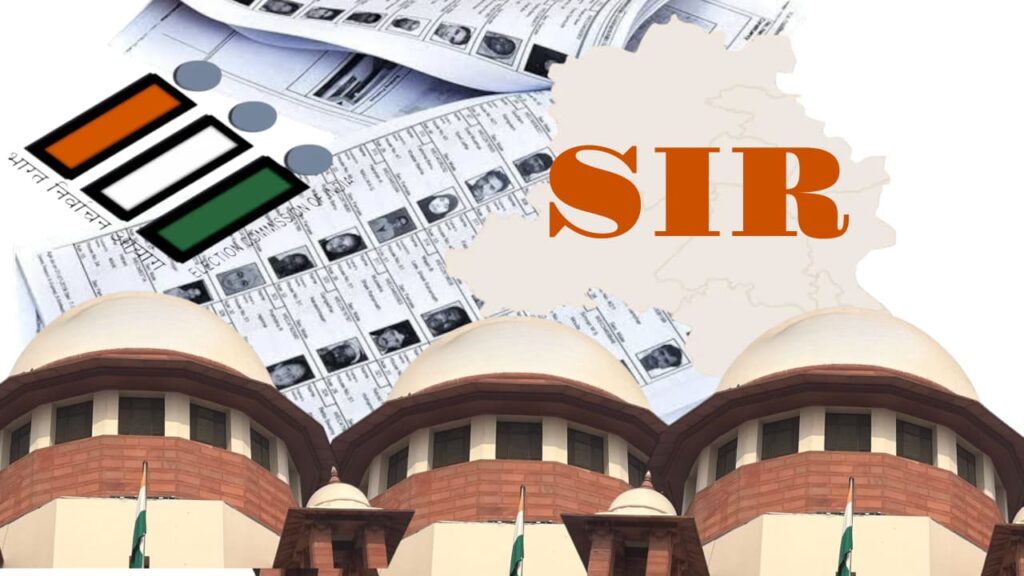
The Mandate for Purity:
Understanding the Special Intensive Revision (SIR)
The Special Intensive Revision (SIR) of Electoral Rolls, an extensive, phased, and nationwide exercise undertaken by the Election Commission of India (ECI), stands as a monumental effort to uphold the integrity and purity of the democratic process. More than a routine update, SIR is a comprehensive, house-to-house verification drive conducted after a significant gap of approximately two decades since the last such intensive exercise (circa 2002-2004).
Operation Purity: Why the ECI’s Massive Special Intensive Revision is a Watershed Moment for Indian Democracy.
The necessity of this massive undertaking stems from various challenges that naturally accumulate in a rapidly urbanizing and highly mobile society like India: rapid migration, non-reporting of deaths, instances of duplicate registration, and the need to seamlessly integrate millions of newly eligible young voters. The SIR is designed to systematically address these accumulated discrepancies, ensuring that the foundational principle of “one person, one vote” is safeguarded and that the electoral roll is meticulously accurate, inclusive, and error-free.
The Objectives: Accuracy, Inclusivity, and Integrity
The SIR is driven by three core objectives, each critical to the health of the electoral system:
Two Decades in the Making: Everything You Need to Know as the Special Intensive Revision (SIR) Reshapes the Electoral Landscape.
Maximum Inclusion of Eligible Citizens: To ensure that every citizen who meets the eligibility criteria (ordinarily resident and 18 years of age or more as of the qualifying date, such as January 1, 2026, for the current phase) is accurately registered. This is a crucial step for boosting voter participation, especially among marginalized groups and first-time voters.
Meticulous Deletion of Ineligible Entries: To systematically remove names of deceased voters, individuals who have permanently shifted residences, and duplicate entries, thereby eliminating the possibility of electoral malpractice and the presence of ‘ghost voters’ that erode public trust.
Correction and Standardization: To correct errors in existing entries—such as misspellings, incorrect addresses, or outdated photographs—ensuring that every elector’s record is current and verifiable.
The Process: A Detailed, Door-to-Door Mobilization
The Special Intensive Revision is far more detailed and resource-intensive than the regular Summary Revision conducted annually. It involves a phased, transparent, and multi-step process carried out across various states and Union Territories, covering approximately 51 crore voters in the current phase.
Phase 1: The Enumeration Drive (The Doorstep Visit)
The cornerstone of the SIR is the extensive house-to-house verification conducted by the dedicated Booth Level Officers (BLOs).
Mandatory Visits: BLOs, armed with pre-printed Enumeration Forms (EFs), are mandated to visit every single household at least three times to ensure no elector is missed, especially those who may be absent during the initial visit.
The Enumeration Form: Existing voters receive a unique, semi-filled Enumeration Form that they must complete and submit. This requirement makes the current SIR particularly stringent and comprehensive, effectively asking all current electors to re-verify their details.
Linking to Past Rolls (The Streamlining Provision): In a key provision to streamline verification, electors are being asked to trace their names—or the names of a parent or relative—to the electoral roll from the last intensive revision (conducted around 2002-2005). The ECI has clarified that voters who successfully link their names to these older records may be exempted from submitting a fresh set of documents for eligibility proof, speeding up the process for long-standing, genuine voters.
Inclusion of New Voters: Simultaneously, the BLOs collect applications (Form 6) from individuals who have recently turned 18 or will attain the age of 18 by the subsequent quarterly qualifying dates, ensuring the roll is future-ready.
Phase 2: Draft Publication and Public Scrutiny
The commitment to transparency is evident in the subsequent phases of the SIR:
Publication of the Draft Roll: After the door-to-door enumeration is complete, the Draft Electoral Rolls are publicly released on a stipulated date (e.g., December 9, 2025). This is the public’s critical window for engagement.
Claims and Objections Window:
A defined period (e.g., December 9, 2025, to January 8, 2026) is opened for citizens to file claims (if their name is missing) or objections (if they believe an ineligible name is included or an entry requires correction). This public scrutiny phase acts as a crucial check and balance.
Verification and Disposal: Electoral Registration Officers (EROs) and their Assistants (AEROs) meticulously hold hearings and conduct verification checks on all submitted claims and objections, ensuring due process is followed for every single case, a process that continues until the final publication date.
Phase 3: The Final Product
The exercise culminates in the publication of the Final Electoral Rolls (e.g., February 7, 2026), which then serves as the base roll for all forthcoming elections, ensuring the polls are conducted on the basis of the most accurate and pure voter list possible.
The Dialogue and The Way Forward
The sheer magnitude and detailed nature of the Special Intensive Revision have inevitably led to significant public and political dialogue. Concerns have been raised by some political parties regarding the potential for procedural errors and the fear of disenfranchisement due to the new requirements for documentation and tracing names to old rolls. They argue that the stringent verification process, particularly for those unable to trace old records, places an undue burden on genuine, but less documented, electors.
In response, the ECI has consistently maintained that the SIR is a necessary, legally-backed exercise designed to remove accumulated errors that compromise electoral integrity. They emphasize the role of BLOs as facilitators, the availability of online assistance, and the robust timeline for claims and objections to ensure that no eligible voter is left out.