“Sudan on Fire — Massacre in Darfur: City of El Fasher Falls to RSF Amid Reports of Genocidal Slaughter”
In late October 2025, the paramilitary force Rapid Support Forces (RSF) captured the city of El Fasher in North Darfur after an 18-month siege. What followed has been described by survivors, aid groups and satellite analysts as mass killings, ethnic-targeted violence, sexual assault and a humanitarian catastrophe. International observers warn that the horror unfolding may amount to war crimes or even genocide.
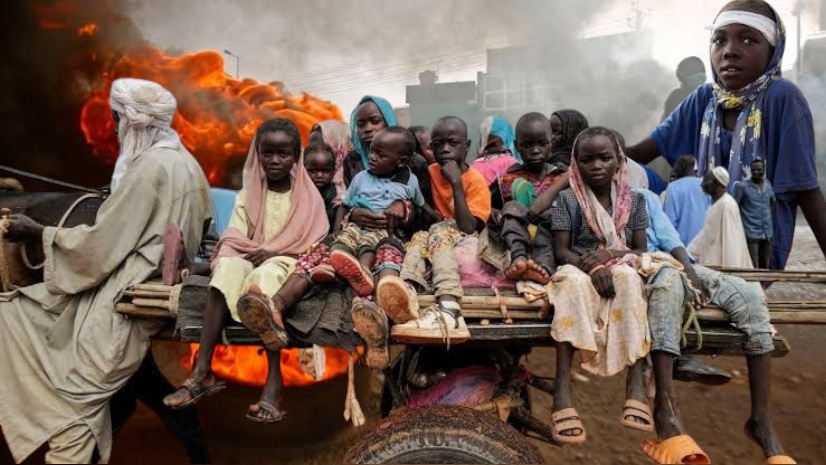
The city of El Fasher — long under siege, starving and cut off — fell to the RSF on or around 26 October 2025, marking the last major government-military stronghold in the Darfur region changing hands. Until then, the city had been encircled by the RSF since around May 2024, with mass barriers erected, food and medical aid blocked, and the civilian population trapped.
The capture and collapse
According to multiple sources, once the RSF forces entered El Fasher, they commenced house-to-house raids, summary executions, and targeted killings of civilians. Network reported that within the first few days of entry “at least 1,500 people” were killed. A separate statement by the same group estimated that “nearly 2,000 civilians” were killed in only a few hours.
Videos verified by the Al Jazeera Sanad verification agency show RSF fighters executing unarmed men, standing over rows of bodies, and capturing the moment on camera. Meanwhile, the Humanitarian Research Lab (Yale School of Public Health) using satellite imagery found clusters of corpses, visible pools of blood, and signs consistent with mass killings.
Ethnic dimension & targeted violence
Evidence suggests that the atrocities carried out by the RSF in El Fasher have an ethnic component. According to local and international monitors, the non-Arab tribes of Darfur (for example the Fur, Zaghawa and Berti) have come under systematic attack, with forced displacement, summary execution and what is described as “ethnic cleansing”. One local account said:
“The majority of people won’t stay in El-Fasher because they are terrified of the RSF … because they know they will be persecuted by them.”
The Ministry of Social Welfare in Sudan stated that in the first two days after RSF entered El Fasher, approximately 300 women were killed and 25 raped. The attacks on hospitals, healthcare workers and aid infrastructure further illustrate a strategy of targeting not only combatants but civilian life-sustaining systems.
Humanitarian calamity and displacement
The fall of El Fasher has triggered mass displacement. The International Organization for Migration reported that more than 36,000 people fled the city in the days following its capture. The Médecins Sans Frontières (MSF) noted that while more than 60,000 people had fled, only about 5,000 were registered in nearby safe areas — meaning thousands remain missing, unaccounted for or still trapped.
The siege conditions prior to the fall helped create conditions of famine. The Integrated Food Security Phase Classification (IPC) declared that El Fasher had entered the worst category (Phase 5) of food insecurity: famine. Civilians reported subsisting on animal feed and desperate rations.
International reactions & calls for action
The international community has begun to respond. The United Nations Human Rights Office flagged “credible reports of mass killings … summary executions … and indications of ethnic motivation for killings” in El Fasher. Amnesty International said the RSF’s actions may amount to war crimes and crimes against humanity, and urged immediate access for humanitarian aid and safe corridors for civilians to flee. The U.S. government is pushing for a humanitarian truce, and the International Criminal Court (ICC) is working to preserve evidence of possible crimes committed by the RSF in Sudan.
Why this matters
The capture of El Fasher represents a major shift in the decades-long conflict in Darfur. The RSF now controls all five state capitals in the region, consolidating their power and leaving civilian populations vulnerable. The scale and nature of the killings — on top of the deliberate siege, starvation tactics, blocked aid and targeting of ethnic groups — raise alarms about a repeat of previous Darfur-era genocide-level violence.
What we don’t yet know
• Precise casualty figures remain impossible to verify; estimates range from at least 1,500 to several thousand killed in the days after entry.
• Many civilians remain trapped inside El Fasher, communication lines remain cut, and humanitarian access is severely constrained.
• The long-term fate of thousands of missing persons, the nature of forced displacement and ethnic segregation efforts is still unfolding.
• Whether the world will mount an effective, timely response or allow the atrocity to sit largely un-addressed.
In short, El Fasher’s fall to the RSF has unleashed a wave of atrocity: mass killings, ethnic-based violence, targeted destruction of civilian infrastructure, and a humanitarian disaster on top of it. The world is watching — but action is urgent.